DIGITAL EXHIBITIONS2


VIRTUAL EXHIBITION
Our Shared Symphony: An Intercultural Dialogue with UNESCO SDG Artefacts
The Earth is our shared, unfinished symphony—a vast, dynamic composition in which we are all performers. As the diverse and hybrid species of ‘Homo sapiens’, we are at once the musicians, the composers, and the audience. This virtual exhibition, inspired by UNESCO's global blueprint for a sustainable future, frames the Sustainable Development Goals (SDGs) as the essential movements of this grand piece.
Your journey through this living composition unfolds in three interconnected parts:
First, explore the core Exhibition Chapters, where the symphony comes to life. These curated “movements” — focused on SDG 4 (Quality Education), 5 (Gender Equality), 9 (Industry, Innovation, and Infrastructure), and 11 (Sustainable Cities and Communities) — showcase the rhythms, chords, melodies, and conductors contributing across cultures and time. Concluding each chapter, an integrated timeline will chart the featured artefacts across centuries and continents, mapping the enduring human evolution of these global themes. Stories, artefacts, and narratives will reveal how we are actively composing a more sustainable and inclusive world.
Next, step into the SDGs Gallery — a platform for global discovery of UNESCO’s 2030 Agenda for Sustainable Development. This space provides the statistics, trends, and key insights to measure, understand, and connect our global efforts. Through regional dashboards and indicator comparisons, and a Mini Quiz for each emphasised SDG (4, 5, 9, 11) from our exhibition, it visualises our collective achievements and challenges, and encourages you to test your knowledge and reflect on the key exhibits.
Finally, try out our interactive Global Gallery Challenge, an engaging game where you can test your knowledge and make connections between the artefacts, cultures, and the Sustainable Development Goals.
We invite you to explore these spaces, discover the connections, and find your own role in this ongoing, collective creation.

Movement I: SDG 9 —The Rhythms: Foundations for Progress
Every great symphony begins with a foundational structure—a rhythm that holds the piece together. This movement, dedicated to industry, innovation, and infrastructure, is that essential groundwork. It is the steady pulse of progress—from the ancient trade routes that first connected our melodies to the inclusive, innovative attempts that now harmonise our world. We invite you to explore the resilient systems and ingenious breakthroughs that form the stage upon which our shared future is composed. It is the rhythm of our planet, building a strong, inclusive, and adaptive groove for all.
Movement II: SDG 11 —The Chords: Diversification of Urban Communities
Upon the foundational rhythms of SDG 9, we build the living, breathing spaces of our communities. This movement, on Sustainable Cities and Communities, listens to the spaces we share, exploring how diverse communities shape the emotional and spatial texture of our shared world. A city is not merely built of steel and concrete, but of memory, identity, and shared experience. In this chorus, the ancestral basslines of heritage intertwine with the vibrant, contemporary outlooks of diverse communities. We are not composing a single, monolithic anthem, but a complex polyphonic arrangement where every voice finds its place and every story contributes to the collective resonance of belonging.


Movement III: SDG 4 —The Melodies: Echoes Throughout Generations
While a rhythm provides the structure, and harmony provides the depth, it is the melody that carries the soul of music. This movement recognised Quality Education as the timeless melody of our shared symphony. Learning is the theme passed from one generation to the next, evolving with each performance yet retaining its essential wisdom. Here, we listen to the echoes of knowledge across cultures and languages. We explore how we tune our ears—and our tools—to ensure this melody is a resonant, accessible, and lifelong composition for all, empowering everyone to contribute their own unique themes to the whole.
Movement IV: SDG 5 - The Scores: Equity Giving Voice to All
What is a symphony without a conductor to ensure balance, equity, and that every instrument is heard? This final movement, Gender Equality, represents the vital role of the conductor. It is not about enforcing a single tempo, but about ensuring justice and agency in our collective performance. It is the principle that guarantees every musician—regardless of section or instrument—has the right and the opportunity to play to their full potential. By empowering all voices, especially those historically silenced, we move from a cacophony to a truly equitable and magnificent harmony, where the composition is led by, and benefits, all of humanity.
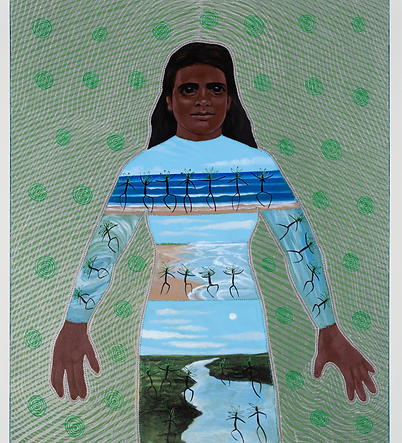.png)
Artist Sharing

Curator Talk





About the Project
Global Shared Learning:
INTERCULTURAL HERITAGE GLOBAL CLASSROOM
This GSL Classroom experience is based on COIL (Collaborative Online International Learning), a teaching and learning methodology developed by Jon Rubin at the State University of New York (SUNY).
COIL combines the four essential dimensions of virtual mobility
(1) it is a collaborative exercise between teachers and students
(2) makes use of technology and online interaction
(3) it has international dimensions
(4) it is integrated into the learning process
Our Team
Dr Heather Gaunt
Senior Research Fellow – Specialist
Museums & Collections Department,
University of Melbourne
Prof. Florian Knothe
Director of the University Museum and Art Gallery
Associate Professor in the School of Humanities, HKU
Dr. Miguel A. González Virgen
Director Science Gallery Monterrey
Tecnológico de Monterrey
MA Lizette Zaldívar Larrañaga
National Director of Cultural Heritage
Tecnológico de Monterrey
Students (in alphabetical order)
Lucas Bezzina
CAO Zhe, Coco
CHEN Jun, Emma
Ricquie Chen
Chen Yanlin, Elieen
Gao Xiaoya, Gloria
HE Chen, Cloris
HUA Ziyu, Lucy
JIAO Zidi
Kang Ning, Nene
Li Linzi, linzi
LI Xiaoyan
Li Yuqi, Yulia
LIN Zixin, Cora
LIU Ruoyu, Royce
LIU Yiyang, Dora
LYU Yuemeng, Erin
Nathan Mathieu
Shadi Naghizadehkakhki
REN Wei, Julia
Simon Schwaab
Amanda Tang
WANG Yanchi, Brooke
WANG Yifei
WANG Ziyuan, Hazel
WEI Yuting, Ashley
Hadar Weinstein
XU Jieyi, Sally
Hanming Zhang
Xinran Zhang
ZHAO Wuyou, Beverly
Zou Zhuoying, Sherry
The University of Hong Kong
The University of Melbourne
Tecnológico de Monterrey
This virtual exhibition is the result of a cooperation among


Address: 90 Bonham Road, Pokfulam, Hong Kong View the location on Google Maps
Tel: (852) 2241 5500 Fax: (852) 2546 9659 Email: museum@hku.hk
© 2025 by University Museum and Art Gallery, HKU. All Rights Reserved


